Control Didymo Aotearoa
Aim: To develop a novel way to control the invasive pest species Didymo (Didymosphenia geminata), using targeted interfering RNA
The days of using indiscriminate pesticides or herbicides to control pest species are largely behind us. The future will include a range of targetted, species-specific tools (1). One such technique is to use interfering RNA. This is already being used in medicine (2) and in insect pest control (1) and more recently in control of fungi such as that responsible for Myrtle rust (3). This project is aiming to adapt that existing technology for use in an aqautic setting to control didymo. If successful, this could be a blue print for controlling other aqautic invasive or pest species in New Zealand and globally.
Didymo
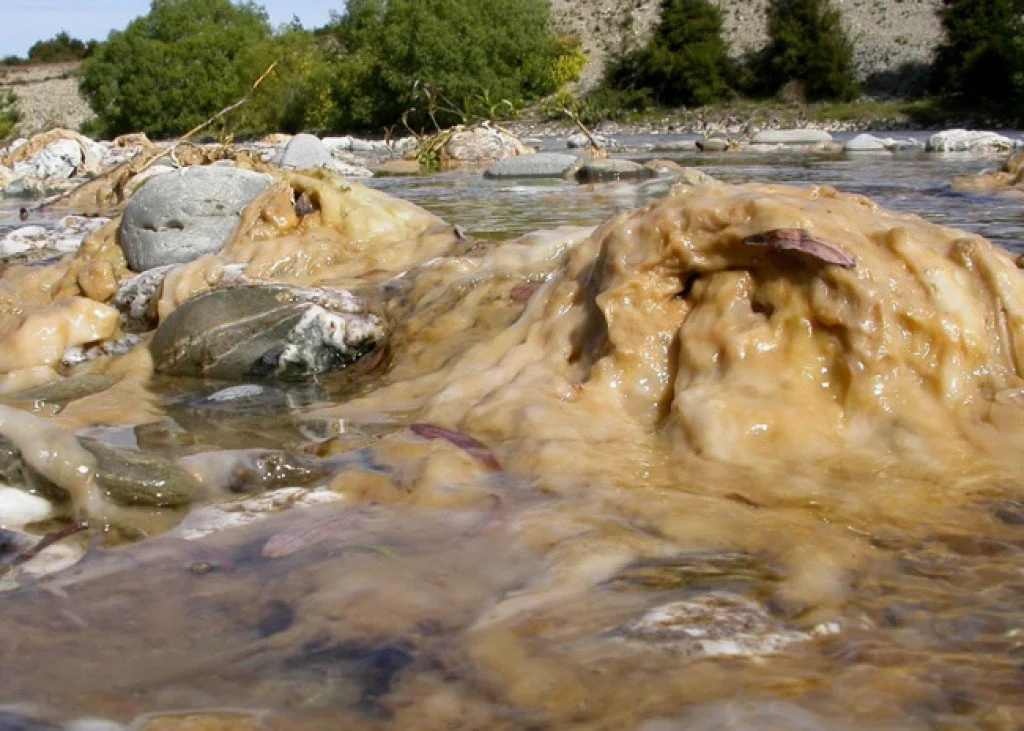
Didymo (Didymosphenia geminata) is an invasive alga that was likely accidentally introduced to Aotearoa New Zealand at the turn of the 21st Century on the footwear of a tourist from North America. It has led to infestations in numerous South Island rivers, but to date has not affected North Island rivers. Didymo produces thick polysaccharide mats up to 20 cm thick that smother the river bed. This layer of ‘rock snot’ can suffocate the ecology of the river whilst also reducing the river to what could be described as unsightly brown sewer. The mats are not sufficiently grazed or controlled by any native species and only an extreme flood event can wash some of it away downstream. To date, all previous efforts to control didymo have been largely unsuccessful.
Interestingly, when didymo is in a ‘happy’ state it replicates but goes relatively unnoticed in the river. However, when it becomes ‘unhappy’, e.g. due to suboptimal water chemistry, it channels all its energy into producing the ‘rock snot’. This means that there are already molecular switches within didymo that can switch off the ‘rock snot’ production.
The costs of didymo include:
1) Ecological: didymo severely harms the river ecology, reducing the diversity and health of the pre-existing species, including invertebrates, fish and birds.
2) Tourism and recreation: a river that looks like a sewer is a major blot on the New Zealand tourism landscape. Taonga treasures such as trout fishing (that was previously world-class) and tramping are being increasingly damaged, and tourism spend will be reducing as a consequence (4).
3) Irrigation and agriculture: didymo can block filters and damage pumps involved in irrigation systems and so damage the agriculture industry. A recent survey of Irrigation NZ members found the didymo issue was very dependent on location (i.e. severity of river infestation) and for a minority of irrigators is was an extreme problem – average severity score of 25/100, ranging from no problem to extremely bad problem (5). The financial cost to NZ is difficult to gauge, involving time required to keep the systems clean of didymo, the time diverted from other task and the cost of the potential loss of crop, but across the South Island could easily be millions of dollars.
4) Hydroelectric power: didymo can block water inlets and damage hydroelectric turbines, so increasing the cost of generation and affect continuity of power production, so affecting all industries in New Zealand. One example is from the Manapouri power station which is now required to discharge water into Doubtful Sound on a regular basis to flush the didymo out of the system (6). This water is lost to power generation and so is a major loss of electricity, so putting the price of generation up and being an opportunity cost to NZ. Again, it is difficult to put a dollar price on the cost of didymo to the electricity industry, but across all the generating companies is likely to be in the millions of dollars.
The costs of pests to New Zealand - the bigger picture
There is a pressing need to develop a control for didymo that is safe and specific, which is what this project aims to achieve. However, the bigger picture is that if this project is successful, then it could be a blue print technique for the control of other invasive species. The total economic cost of pests to New Zealand’s primary sector is estimated to be almost $6 billion in the 2019-20 financial year. Of the $6 billion estimate, defensive costs represent almost $1.7 billion and production losses $4.3 billion (7). Other aquatic pests, such as Lake Snow (Lindavia intermedia) or even Gold Clams (Corbicula fluminea) could be specifically controlled using the same technique that we are proposing. Future new incursions could also potentially be nipped early in the bud in the same way. This could represent billions of dollars of advantage and financial saving for New Zealand.
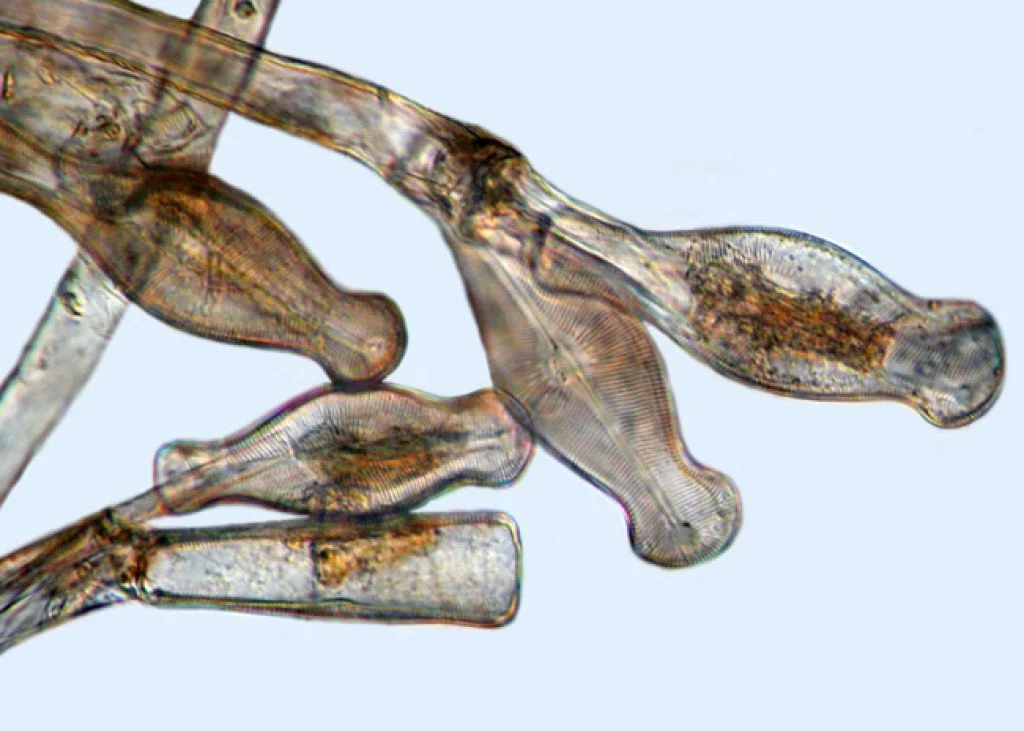
Didymo on mucilaginous stalks, x200. Source Manaaki Whenua, Landcare Research
Didymo (rock snot), Photo Courtesy of Landcare Research
The costs of pests to New Zealand - the bigger picture
There is a pressing need to develop a control for didymo that is safe and specific, which is what this project aims to achieve. However, the bigger picture is that if this project is successful, then it could be a blue print technique for the control of other invasive species. The total economic cost of pests to New Zealand’s primary sector is estimated to be almost $6 billion in the 2019-20 financial year. Of the $6 billion estimate, defensive costs represent almost $1.7 billion and production losses $4.3 billion (7). Other aquatic pests, such as Lake Snow (Lindavia intermedia) or even Gold Clams (Corbicula fluminea) could be specifically controlled using the same technique that we are proposing. Future new incursions could also potentially be nipped early in the bud in the same way. This could represent billions of dollars of advantage and financial saving for New Zealand.
This programme - Interfering RNA
Whilst DNA is the source code for most living organisms, RNA is the method by which this code is read and translated into action. If DNA is the recipe book, then RNA is the photocopy of one page, and reading the one recipe results in a dish being served (e.g. the production of the particular protein that performs a function, such as an enzyme that manufactures ‘rock snot’). RNA is made up of 4 base molecules, and these molecules have a pairing molecule that they seek to bind to. This means that if there is a single-stranded string of RNA code, when the mirror-image string of code is presented, then these two strings will strongly bind together (become double-stranded) and this will block the RNA from functioning. Only the exact mirror-image RNA will bind and so if you know the particular RNA code that you want to block, you can make the specific RNA that will bind and block it, that will not block any other RNA code. By this means it allows this blocking mechanism to be highly specific for a single RNA molecule, and so allows for an extremely high degree of target accuracy. This is not just species specific, but molecule specific, which is a huge advantage when trying to develop a targetting control mechanism that wont stray off-target. This project aims to switch off ‘rock snot’ production within didymo using interfering RNA, and return it to its ‘happy’ and harmless state.
Our programme plan (these are only outline stages and the results of each stage may mean we have to adjust the next stage):
1) Identify the key genes in didymo that are involved in producing ‘rock snot’ and identify the corresponding RNA codes involved.
2) Make RNA strands that will bind to and interfere with the ‘rock snot’ RNA, and see whether these can switch off ‘rock snot’ production in a laboratory setting.
3) Explore ways of delivering the interfering RNA to didymo, possibly using existing didymo viruses.
4) In highly controlled steps contained in the laboratory, see whether we can deliver interfering RNA into didymo and so switch it from its ‘rock-snot’ producing state until didymo is unnoticable.
If we get this far, and only once any risks have been identified and mitigated we would then propose a programme of field trials, with permission and oversight of all appropriate stakeholders and regulatory bodies including local Iwi, MPI and Biosecurity New Zealand. If successful, then the field trials could be extended across the South Island, and hopefully return New Zealand rivers back to their previous condition, and reverse the harm done to our ecology, recreation, tourism, agriculture and energy production.
If this approach was successful, this could be a blue print for controlling other invasive or pest aqautic species in New Zealand and globally.
References
1. Stokstad E. The perfect pesticide? Science 2024;384(6703):1398-401. doi: 10.1126/science.adr2991 [published Online First: 20240627]
2. Traber GM, Yu AM. RNAi-Based Therapeutics and Novel RNA Bioengineering Technologies. J Pharmacol Exp Ther 2023;384(1):133-54. doi: 10.1124/jpet.122.001234 [published Online First: 20220609]
3. Degnan RM, McTaggart AR, Shuey LS, et al. Exogenous double-stranded RNA inhibits the infection physiology of rust fungi to reduce symptoms in planta. Mol Plant Pathol 2023;24(3):191-207. doi: 10.1111/mpp.13286 [published Online First: 20221217]
4. Bell C. Comment from trout fishing guide. Cawood T, 2025.
5. Adams N. Personal communication - survey of Irrigation NZ members. Survey of Irrigation NZ members , 2025.
6. Herrick D. Personal communication - cost of didiymo to Meridian Energy. Discussion of costs to Meridian Energy of didymo , 2025.
7. Industries N-BAPfMfP. Economic costs of pests to New Zealand: 2020 update. MPI Technical Paper No: 2021/29, 2021.